Description
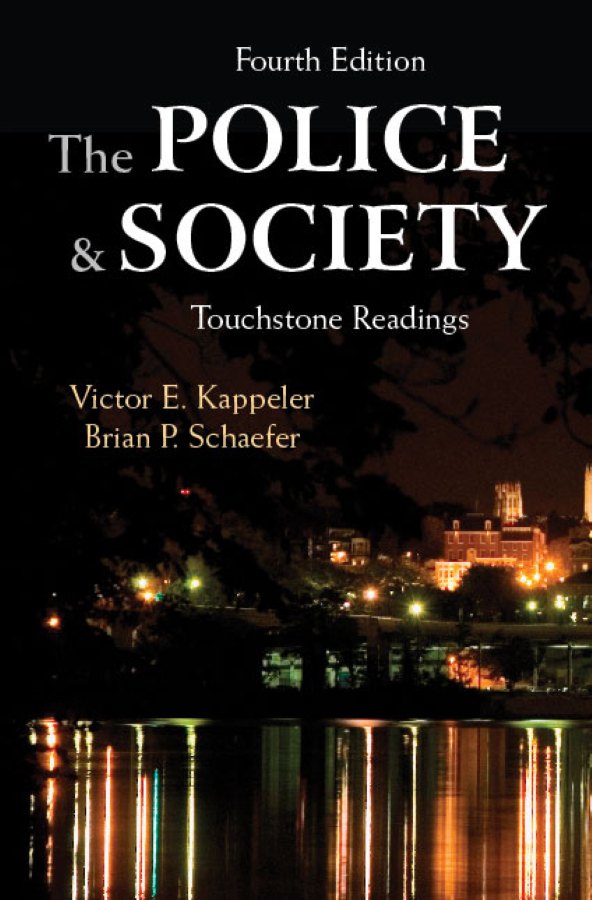
Some of the many issues and conflicts addressed in this collection include: What is the nature of the police role and function? Who benefits from police service? Who is harmed? How are public safety and social order secured while maintaining individual rights and freedoms? To what extent do our expectations about the police and society reflect our values and demands? Are the police a society unto themselves? Is policing at a critical crossroads?
The editors assembled this volume with the goal of helping readers to identify underlying assumptions, to dissect how values influence inquiries, and to discover connections. A better understanding of the role of the police in society provides a solid foundation for assessing the efficacy of future police/society relationships.
1. The Evolving Strategy of Policing (George L. Kelling and Mark H. Moore)
2. The Evolving Strategy of Police: A Minority View (Hubert Williams and Patrick V. Murphy)
3. The Commission and the Police (Wesley G. Skogan)
4. Revising the Histories and Futures of Policing (Victor G. Strecher)
5. The Iron Fist and the Velvet Glove (Crime and Social Justice Associates)
Part II: THE ROLE OF THE POLICE IN SOCIETY
6. The Police: Mandate, Strategies, and Appearances (Peter K. Manning)
7. The Capacity to Use Force as the Core of the Police Role (Egon Bittner)
8. Street Justice: A Moral Defense of Order Maintenance Policing (Gary W. Sykes)
9. Wicked Overseers: American Policing and Colonialism (Kevin F. Steinmetz, Brian P. Schaefer, and Howard Henderson)
10. Broken Windows (James Q. Wilson and George L. Kelling)
11. Ending Public Space as We Know It (Bernd Belina)
Part III: THE SOCIETY OF POLICE
12. The Quasi-Military Organization of the Police (Egon Bittner)
13. The Informal “Code” of Police Deviancy: A Group Approach to “Blue-coat Crime” (Ellwyn R. Stoddard)
14. People Who Don’t Even Know You (Victor G. Strecher)
15. Democratic Accountability and Policing (Maria Ponomarenko and Barry Friedman)
16. The Tellability of Police Use-of-Force: How Police Tell Stories of Critical Incidents in Different Contexts (Brian P. Schaefer and Richard Tewksbury)
17. Breeding Deviant Conformity: Police Ideology and Culture (Victor E. Kappeler, Richard D. Sluder, and Geoffrey P. Alpert)
Part IV: POLICING SOCIETY
18. The Asshole (John Van Maanen)
19. Violence and the Police (William A. Westley)
20. Suspect Searches: Assessing Police Behavior under the U.S. Constitution (Jon B. Gould and Stephen D. Mastrofski)
21. From “Rabble Management” to “Recovery Management”: Policing Homelessness in Marginal Urban Space (Forrest Stuart)
22. Policing Space, Policing Race: Social Control Imperatives and Police Discretionary Decisions (Sandra Bass)
23. The Dirty Harry Problem (Carl B. Klockars)
24. To Serve and Pursue: Exploring Police Sexual Violence Against Women (Peter B. Kraska and Victor E. Kappeler)
Part V: THE POLICE IN CONTEMPORARY SOCIETY
25. Smoking Guns or Smoke and Mirrors? Schools and the Policing of Latino Boys (Victor M. Rios and Mario G. Galicia)
26. Policing Borders: Unauthorized Immigration and the Pernicious Politics of Attrition (Nik Theodore)
27. Militarizing American Police: The Rise and Normalization of Paramilitary Units (Peter B. Kraska and Victor E. Kappeler)
28. The Dream of Pacification: Accumulation, Class War, and the Hunt (Mark Neocleous)
29. Big Data and the New Transparency: Measuring and Representing Police Killings (Ben Brucato)
30. Reinventing the Police and Society: Economic Revolutions, Dangerousness, and Social Control (Victor E. Kappeler and Karen S. Miller)

Reviews
There are no reviews yet.