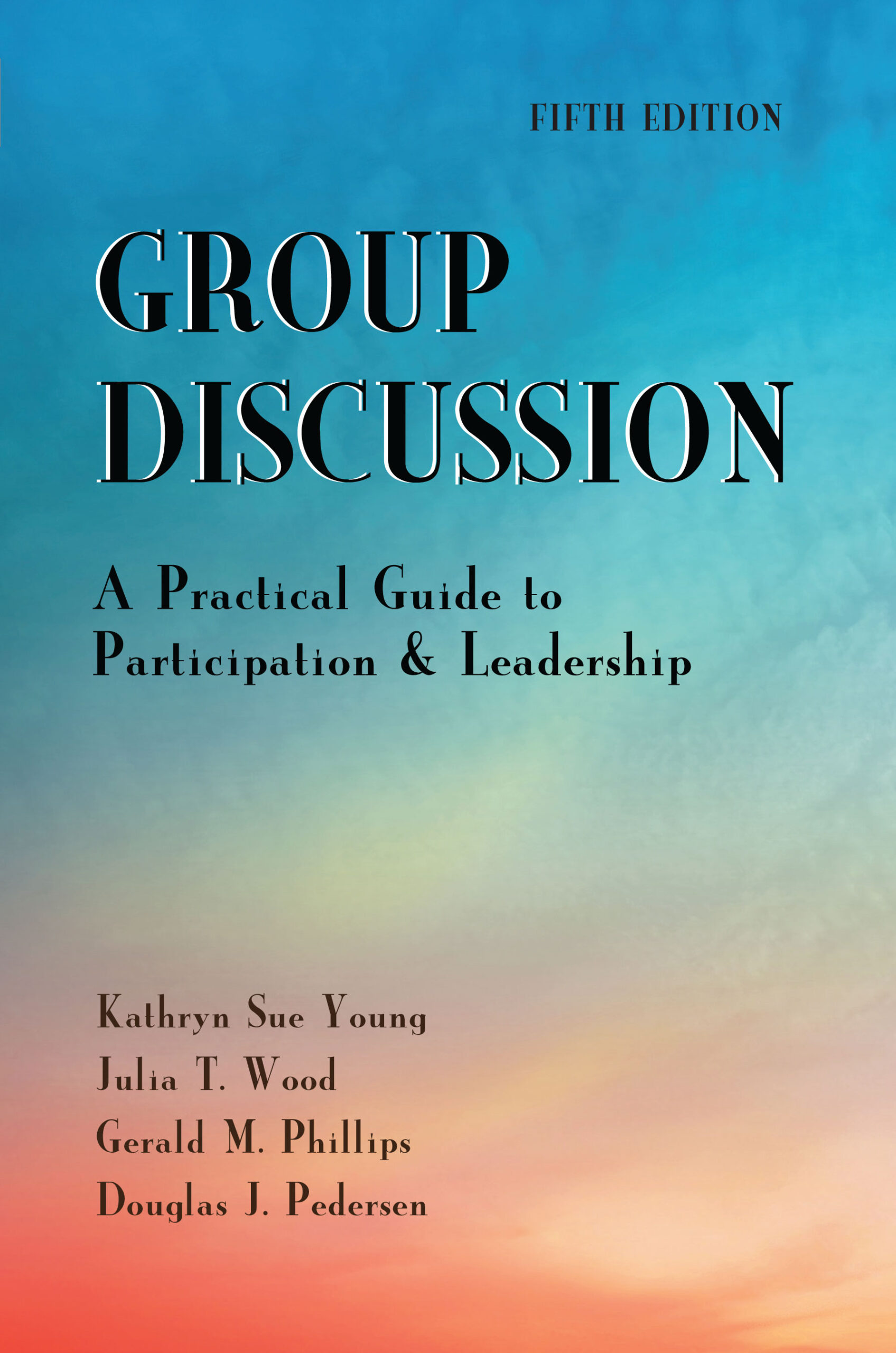
Description
The newest edition once again maps the route to effective communication in groups, emphasizing rhetorical sensitivity, mutual respect, and critical assessment during each step of the standard agenda. The best insights come from diverse inputs in collective problem solving in all types of groups. Individual abilities are strengthened through experiences as effective team members.
1. Introduction to Group Discussion and the Standard Agenda
Perspectives on Group Discussion / What Will This Book Do for You? / The Value of Procedure / Where Will You Use Group Discussion? / Communication Components / Functions of Groups / Motivations for Being an Effective Group Member / Overview of the Standard Agenda / Why the Standard Agenda? / How to Learn about Group Discussion / An Intercultural Note / The Choices Are Yours
2. Understanding the Group as a System
The Systems Perspective / Why the System Might Not Work / Making the System Work
3. Exploring the Group System
Input Elements / Process Elements / Outcome Features
4. Individual Choices That Affect the System
Rhetorical Sensitivity / Perception / Verbal Communication / Listening / Nonverbal Communication / Choices and Consequences
5. Your Group Discussion Toolbox
Types of Decision Making / Problem-Solving Models / Planning and Running Meetings
6. Making Effective Choices When Leading
Brief Overview of Leadership Theories / Characteristics of Good Leaders / Selecting and Shaping a Leader / Remaining Effective as a Leader / Leadership Planning and Preparation / Strategies for Leading
7. Creating a Constructive Climate and Managing Conflict
Role of Conflict in Discussion / Disruptive vs Constructive Conflict / Components of Constructive Climate / Types of Conflict / Conflict Resolution Styles / Groupthink / Troubleshooting
Section II: HOW TO USE THE STANDARD AGENDA
8. Standard Agenda Step One: Understanding the Charge
STEP ONE GOALS / Understanding the Charge / Ascertaining Your Authority / Assess Your Resources / Knowing When You Are Done / Legitimacy of Topics / OUTCOMES OF STEP ONE / Written Record of the Group’s Understanding / Questions about the Charge / MEMBER TASKS IN STEP ONE / Becoming Familiar with Colleagues / Exercising Your Options / LEADER OBLIGATIONS IN STEP ONE / Choosing a Leadership Style / Preparing for the Leadership Role / Setting a Leadership Tone / Taking Leadership Responsibility / Wrapping It Up / An Unspoken Contract for Serious Group Problem Solving
9. Standard Agenda Step Two: Understanding and Phrasing the Question
STEP TWO GOALS / Exploring the Background of the Problem / Phrase the Question / Types of Questions / OUTCOMES OF STEP TWO / MEMBERS TASKS IN STEP TWO / LEADER OBLIGATIONS IN STEP TWO
10. Standard Agenda Step Three: Fact-Finding
STEP THREE GOALS / Getting Started / Basic Questions / Criteria for Evaluating Information / Additional Considerations / Using Language / OUTCOMES OF STEP THREE / Answering Basic Questions / MEMBER TASKS IN STEP THREE / LEADER OBLIGATIONS IN STEP THREE
11. Standard Agenda Step Four: Setting Criteria and Limitations
STEP FOUR GOALS / How to Develop Criteria / Defining the Terms / Prioritizing Criteria / How to Determine Limitations / OUTCOMES FOR STEP FOUR / MEMBER TASKS FOR STEP FOUR / LEADER OBLIGATIONS IN STEP FOUR
12. Standard Agenda Step Five: Discovering and Selecting Solutions
STEP FIVE GOALS / Brainstorming / Evaluating Solutions against Criteria / Selecting the Best Solution / Implementation Plan / OUTCOMES OF STEP FIVE / MEMBER TASKS IN STEP FIVE / LEADER OBLIGATIONS IN STEP FIVE
13. Standard Agenda Step Six: Preparing and Presenting the Final Report
STEP SIX GOALS / Preparing the Final Report / Presenting the Final Report / OUTCOMES OF STEP SIX / MEMBER TASKS IN STEP SIX / LEADER OBLIGATIONS IN STEP SIX / Final Thoughts



Reviews
There are no reviews yet.