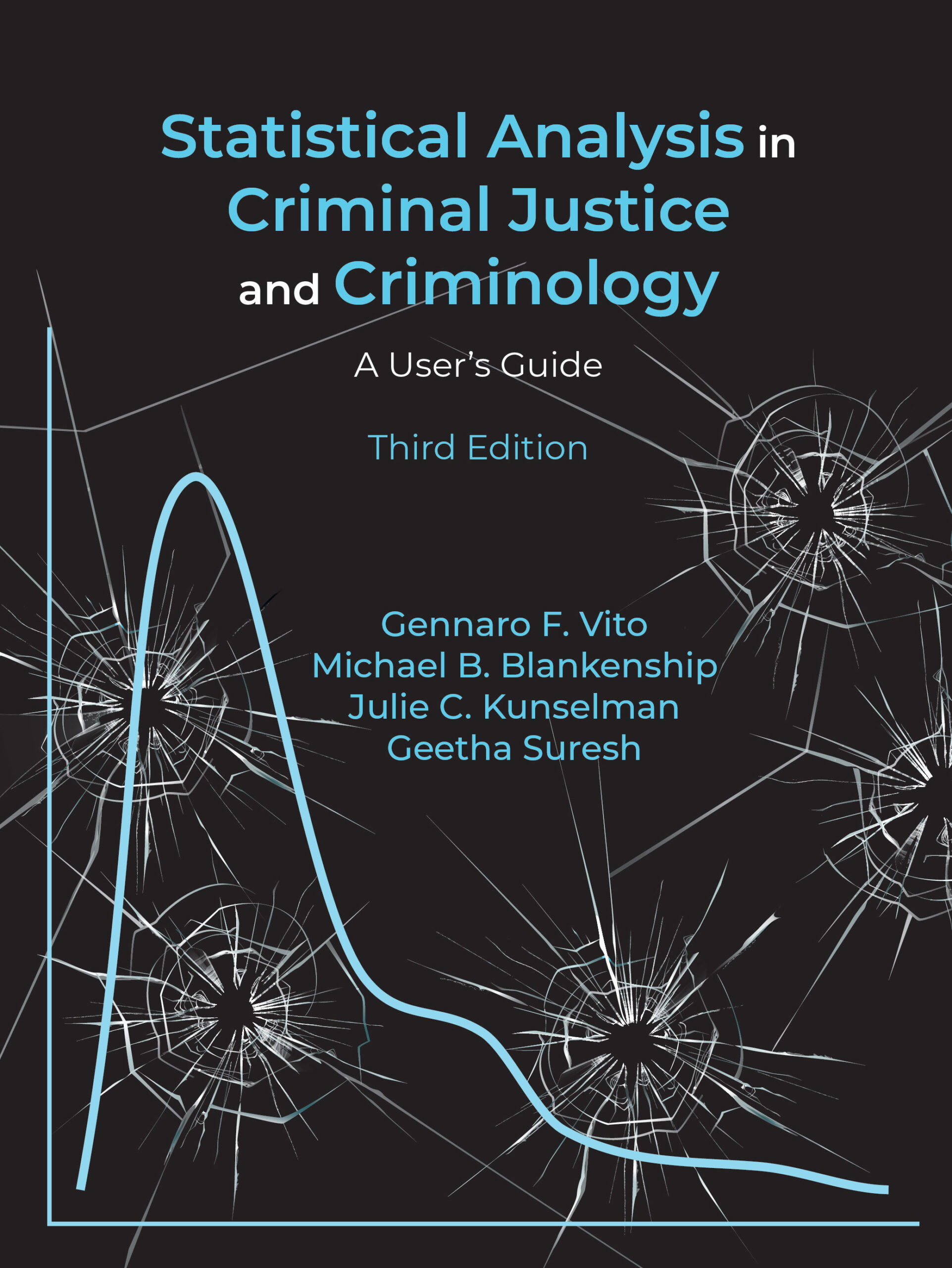
Description
Authors draw from longtime classroom experience to present complex theories in approachable ways. Exercises move from an initial step through the application of concepts explained in each chapter before insights on interpreting the results in a meaningful way is provided. New to this edition is the inclusion of both SPSS and Excel criminal justice data sets used to complete end-of-chapter exercises and analyses. This distinctive offering enables readers to develop their skills with the program most accessible to them.
The Validity and Reliability of Crime Statistics / Percentage Change Analysis / Lying with Statistics
2. Basic Elements of Criminal Justice Research
Elements of the Research Process / Program Evaluation / Levels of Measurement / Measurement and Types of Variables / Using SPSS: An Introduction / Using Excel: An Introduction
3. Summarizing Data and Presenting the Results
Frequency Distributions: Using SPSS / Frequency Distributions: Using Excel / Displaying Frequency Distributions Graphically Using SPSS / Displaying Frequency Distributions Graphically Using Excel / Presenting Your Results
4. Measures of Central Tendency
Measures of Central Tendency / Using SPSS to Analyze Data / Using Excel to Analyze Data
5. Measures of Dispersion
Measures of Dispersion Defined / Calculating Measures of Dispersion with SPSS / Calculating Measures of Dispersion with Excel
6. Contingency Table Analysis
Nonparametric Statistics / Constructing Contingency Tables / Chi-Square Test for Independent Samples / Measures of Association with Chi-Square / Introducing a Third Variable
7. Probability and the Normal Curve
Introduction to Probability / Probability and the Normal Curve / The Binomial Distribution / The Central Limit Theorem / Establishing Confidence Intervals
8. Difference between Means: The t-Test
The t Distribution / Hypothesis Testing
9. Analysis of Variance (One Way)
Source of ANOVA / The F Test (F Ratio) / Calculating ANOVA by Hand / One-Way ANOVA Using SPSS / ANOVA Using Excel
10. Correlation
Defining Correlation / Interpreting Correlation / Considering Causation / Calculating Pearson’s r Using SPSS
11. Regression
Defining Regression
12. The Use of Statistics in Policy Analysis
The Purpose of Research / Program Evaluation / Examples of Successes and Failures


Reviews
There are no reviews yet.