
Description
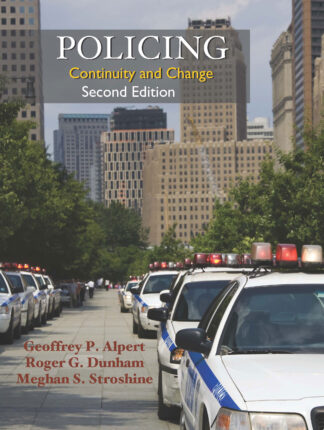
Tracing the evolution of theories and their influence, the authors provide a solid foundation for understanding why people commit crime and the role theory plays in criminal justice practices. The book is an overview of the essentials of criminological theory: its origins, assumptions, causal arguments, applications, and insights into new directions suggested by current testing, expansion, and use of the theories.
Ideas that attempt to describe, explain, predict, and possibly control a specific behavior sometimes remain as originally conceived and sometimes evolve into something quite different. Change is an important—and exciting—aspect of crime theory.
To help readers assimilate and synthesize the essentials of criminological theory, each chapter contains learning objectives, boxed material to stimulate critical thinking, key terms, summaries, and critical review questions. A comprehensive glossary facilitates easy review of important terms.
Table of Contents
1. An Introduction to Criminological Theory
2. Classical Criminology and Deterrence Theories
3. Biological Theories
4. Theories of Psychological Abnormality
5. Intelligence, Learning, and Developmental Theories
6. Structural Theories
7. Social Process Theories
8. Labeling Theory and Reintegrative Shaming Theory
9. Conflict Theories
Glossary of Terms
2. Classical Criminology and Deterrence Theories
3. Biological Theories
4. Theories of Psychological Abnormality
5. Intelligence, Learning, and Developmental Theories
6. Structural Theories
7. Social Process Theories
8. Labeling Theory and Reintegrative Shaming Theory
9. Conflict Theories
Glossary of Terms

Reviews
There are no reviews yet.