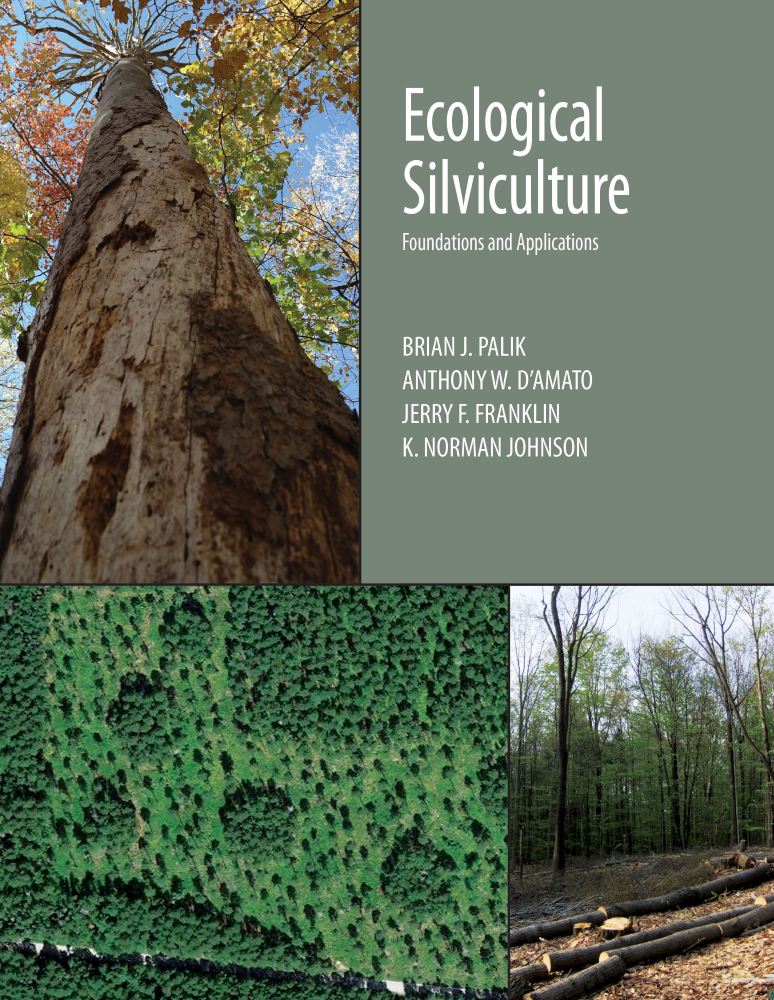
Description
Part I: A BACKGROUND ON ECOLOGICAL FORESTRY AND SILVICULTURE
1. Forestry in the Twenty-First Century
A Context for Forestry in the Twenty-First Century / Our Beliefs for Ecological Silviculture / What You Will Learn from This Book
2. What Is Ecological Forestry?
Ecological Forestry and Timber-Focused Forestry: A Comparison / Relationship of Ecological Forestry to Other Ecological Approaches / What to Remember about Ecological Forestry
3. An Overview of Silviculture
What Is Silviculture, Classically? / Historical Operating Paradigms / The Major Silvicultural Systems and Associated Methods and Treatments / Silviculture: An Ecological Approach / Ecological Operating Principles / Moving Forward
Part II: FOREST DYNAMICS RELEVANT TO ECOLOGICAL SILVICULTURE
4. Natural Disturbances and Biological Legacies
The Nature of Natural Disturbance / Biological Legacies Defined / Functions of Biological Legacies / A General Model of Disturbance and Legacy Creation / What to Remember about Natural Disturbance and Biological Legacies
5. Forest Development Patterns and Processes
Forest Development Stages / Recovery Periods between Disturbance Events / What to Remember about Forest Development Patterns and Processes
6. Natural Disturbance Archetypes
Archetype 1: Forests Initiated by Infrequent Severe Disturbance / Archetype 2: Forest Characterized by Frequent Low-Severity Fire Disturbance / Archetype 3: Forests Characterized by Gap-Scale Wind Disturbance / Archetype 4: Forest Development with Mixed-Severity Disturbances / Utility of the Forest Archetypes
Part III: APPLYING PRINCIPLES OF NATURAL MODELS TO SILVICULTURE
7. Incorporating Continuity into Silviculture: Legacy Retention in Regeneration Harvests
Biological Legacies Revisited / Legacy Retention in Practice / Legacy Retention in Classical Regeneration Systems / Retaining Biological Legacies: What, How Much, Where, and Over Time / What to Retain? / How Much to Retain? / How and Where to Retain Legacies? / How to Account for Retention over Time / Landscape Considerations / What to Remember about Managing for Continuity with Legacy Retention
8. Managing for Complexity, Diversity, and Heterogeneity in Established Stands
Revisiting Complexity/Diversity in Maturing Stands / The Complexity of Thinning: Timber Production versus Ecological Motivations / Modifying Selection Systems to Enhance Spatial Heterogeneity / Decadence Creation / The Complexity of Time: Silvicultural Interventions at Ecologically Appropriate Time Intervals / What to Remember about Managing for Complexity/Diversity in Established Stands
9. The Context of Silviculture at Landscape Scales
Landscape Organization and Silviculture / Areas of Special Concern / Shades of Green Landscapes / What to Remember about Landscape Context
Part IV: ECOLOGICAL SILVICULTURAL SYSTEMS FOR MAJOR ARCHETYPES
10. An Introduction to Ecological Silvicultural Systems
11. Silviculture for Archetype 1 Ecosystems: Forests Subject to Infrequent Severe Disturbances
The Douglas-Fir-Western Hemlock Ecosystem / The Evolution of Timber-Focused Silviculture in the Douglas-Fir-Western Hemlock Forest / Ecological Silviculture for the Douglas-Fir-Western Hemlock Forest / Examples of Ecological Silviculture in Practice / What to Remember about Silviculture for Archetype 1 Ecosystems
12. Silviculture for Archetype 2 Ecosystems: Forest Characterized by Frequent Low-Severity Fire Disturbance
Ponderosa Pine and Dry Mixed-Conifer Forests of Western North America / Evolution of Timber-Focused Silviculture in Ponderosa Pine and Dry Mixed-Conifer Forests / The Shift to Fire Risk Reduction, Restoration, and Resilience / An Ecological Silvicultural System for Ponderosa Pine and Dry Mixed Conifer Forest / Examples of Ecological Silviculture in Practice / What to Remember about Silviculture for Archetype 2 Ecosystems
13. Silviculture for Archetype 3 Ecosystems: Forests with Frequent Gap-Scale Disturbance Regimes
Northern Hardwood Forests as a Natural Resource / Evolution of Timber Production Silviculture for Northern Hardwood Forests / Current Challenges to Northern Hardwood Silviculture / An Ecological Silvicultural System for Northern Hardwood (Archetype 3) Ecosystems / Examples of Ecological Silviculture in Practice / What to Remember about Silviculture for Archetype 3 Ecosystems
14. Silviculture for Archetype 4 Ecosystems: Forests with Mixed-Severity Disturbances
The Great Lakes Red Pine Ecosystem / Timber-Focused Silviculture for Red Pine Forests / An Ecological Silvicultural System for Red Pine (Archetype 4) Ecosystems / Examples of Ecological Silviculture in Practice / What to Remember about Silviculture for Archetype 4 Ecosystems
Part V: ADDITIONAL CONSIDERATIONS
15. Ecological Silviculture for Riparian Forests
What Is a Riparian Forest, Functionally? / Riparian Forests in Space and Time / Riparian Forests as Ecotones / Ecological Silviculture for the Riparian Ecotone / Ecological Guidelines for Riparian Silviculture
16. Silviculture in the Face of Climate Uncertainty
A Background on Climate Change and Forests / Incorporating Climate Change Uncertainty into Silvicultural Considerations / Silvicultural Strategies and Approaches to Adapt Forests to Climate Change / Silvicultural Approaches / What to Remember about Silviculture in the Face of Climate Change Uncertainty
17. Summary and Conclusions: Why Ecological Silviculture Matters
Five Major Themes of Ecological Silviculture / Ecological Silviculture’s Place in the Forest Landscape / Preventing the Forest Management Divergence / Conclusions
Species List
Glossary of Terms



Reviews
There are no reviews yet.