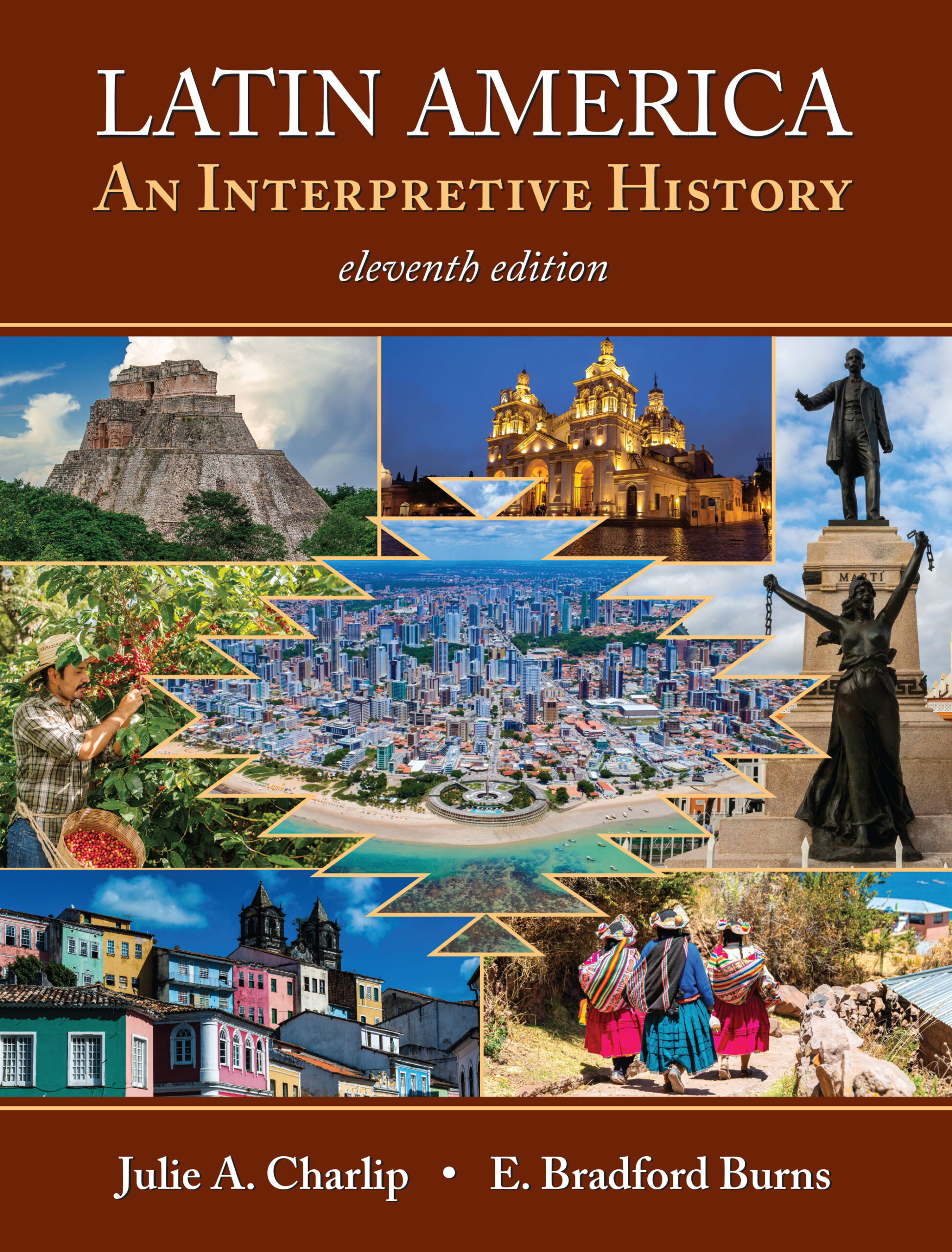
Description
The societies, cultures, economies, and politics of the region come to life in this interpretive history. The story begins with conquest and 300 years of imperial rule. The established patterns resonated throughout Latin America’s history—a hierarchical society, structured by race and ethnicity, with power and wealth in the hands of a few and dominated from abroad. New nations emerged, as did revolutions and dictatorships. The twenty-first century brought prosperity to more of the population, but Latin America remains the region of the greatest economic inequality in the world.
Primary source documents follow each chapter; they are thoughtfully introduced and accompanied by discussion questions. The documents reflect multiple perspectives. The viewpoints expressed were affected by religion, ethnicity, race, class, gender, and material conditions, as well as political and social relationships. The readings offer an opportunity to understand how events were experienced by individuals.
2. From Conquest to Empire
3. Independence
4. New Nations
5. The Emergence of the Modern State
6. New Actors on an Old Stage
7. The Mexican Explosion
8. The World Wars to Cold War
9. The Revolutionary Option
10. Debt and Dictatorship
11. The Limits of Liberalism
12. Forward into the Past?
Glossary of Concepts and Terms
Glossary of Spanish, Portuguese, and Indigenous Terms
A Chronology of Significant Dates in Latin American History



Reviews
There are no reviews yet.