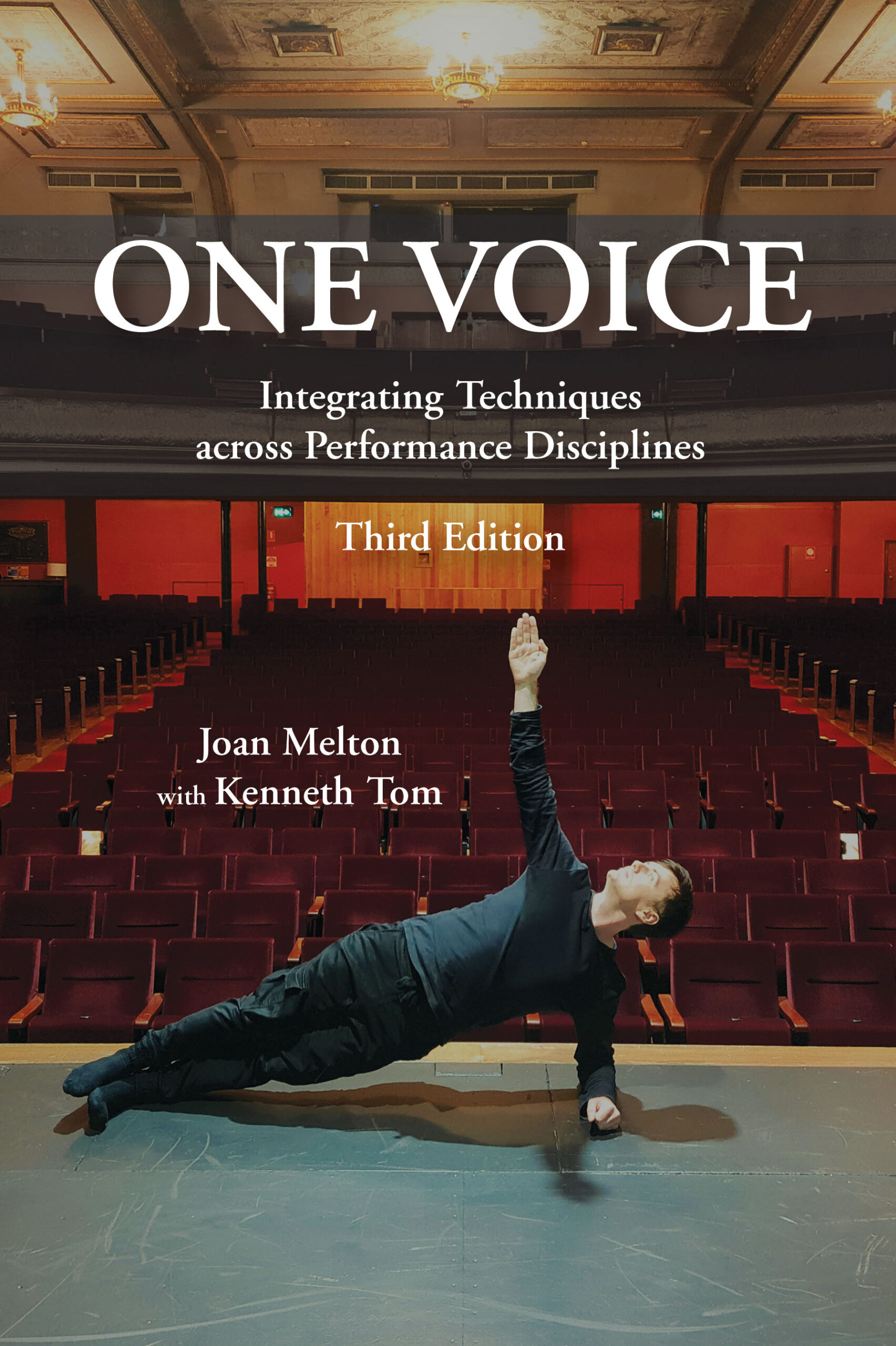
Description
Joan Melton brings together the contrasting worlds of singing and acting training in an approach that is physically energizing, vocally freeing, and infinitely practical. Kenneth Tom contributes a chapter on vocal anatomy and physiology, offering clear and accessible material on how the voice works, along with practical advice on its care.
This groundbreaking book outlines a course of study that effectively integrates techniques from theatre and music across a range of performance trainings. The physicality of Melton’s approach addresses the concerns of professional voice users in any field, and her detailed work on phrasing and the use of language applies equally to speaking and singing.
“I found ‘aha!’ and ‘of course!’ moments within each section. Clear, concise, challenging, and, most of all, welcoming to both the actor-singer as well as the singer-actor. One craft and one voice, no matter the origins of your training. Bravo!” — Kimberly Stephenson, St. Mary’s University
“This important book challenges and encourages a synthesis in singing, voice, speech, and movement pedagogy. Voice, singing, and movement trainers have agreed in theory for some time that more integrated methods of training are essential; however, in practice little progress has been made. Melton’s book is the first theoretical and technical manual outlining a comprehensive method of physical, vocal, and musical integration.” — Michael Lugering, author of The Expressive Actor, University of Nevada, Las Vegas
“Joan Melton has taken the lead in developing a vital new pedagogy for the teaching of theatre voice. Her conviction that the teaching of singing and speaking for musical theatre performers must derive from the same technical core is, in my view, the key to the future of vocal training for actors. Melton’s rich background as a composer, pianist, and classically trained singer have prepared her uniquely for the groundbreaking approach she has taken in her work.” — Mary Saunders-Barton, Penn State University
1. The Foundation
Alignment / Breathing / Fitzmaurice-based Work
2. Vocal Anatomy and Physiology
Overview / Physical Systems: How They Work / Respiration / Phonation / Articulation / Sensation and Learning / Vocal Health and Longevity
3. Range, Resonance, and Articulation
Overview / Extending the Range / Exploring Resonance / Integrating Articulation
4. The Voice-Movement Relationship
Apparent Contradictions / Practical Solutions / Voice and the Triple Threat
Part II: PERFORMANCE DETAILS
5. Reading Music
Overview / Specific Requirements for the Actor / Guidelines for Preparing Material / Working with an Accompanist / Guidelines for Performance
6. Working with Text
Overview / Elements: Vowels and Consonants / Phrasing and Connected Speech, Spoken and Sung / Summary
7. Singing and Acting
Overview / A Formula That Works / Summary
Part III: ADDITIONAL PERSPECTIVES
8. Related Research
Overview / Formal Studies / Practical Explorations / Summary
9. Special Considerations
Overcoming Fears about Singing / Extending Kinesthetic Awareness / Singing as a Diagnostic Tool
10. The Whole Voice
Overview / One Technical Core / Expanding the Vocal Parameters / Summary


Reviews
There are no reviews yet.