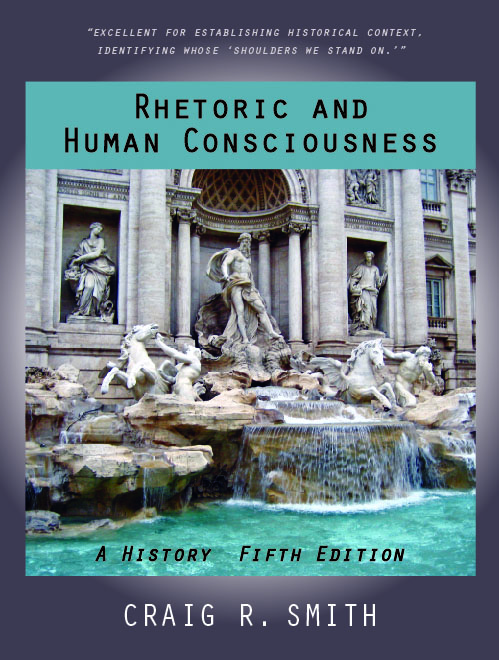
Description
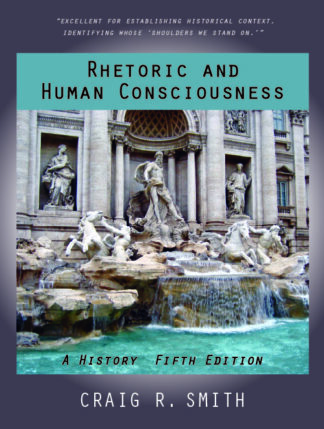
Classic and contemporary examples demonstrate the usefulness of rhetorical theory, especially its ability to inform and guide. By providing probes for rhetorical criticism, discussions also demonstrate that rhetorical criticism illustrates, verifies, and refines rhetorical theory. Thus, the synergistic relationship between theory and criticism in rhetoric is no different than in other arts: Theory informs practice; analysis of successful practice refines theory.
Smith’s absorbing study has been expanded to include thorough treatments of rhetoric in the Romantic Era, feminist and queer theory, and historical context for the creation of rhetorical theory and its use in public address.
“I am skeptical of books that try to historize the whole of the Western rhetorical tradition, but I appreciate Smith’s approach and find this an excellent text for undergraduates.” — Tarez Samra Graban, Florida State University
“A scholarly summary of both well-known and lesser-known contributors to rhetorical theory. The author brilliantly integrates a large body of information that serves to educate students of rhetoric. Broad in scope, the book’s historical approach provides the reader a firm grasp of how rhetorical theory developed over time.” — Keith V. Erickson, University of Southern Mississippi
“A thoughtful, thorough examination of the development of rhetoric in the context of some great thinkers who are not usually thought of as rhetoricians (e.g., Sartre, Freud, Marx, Jung). There are strong additions about Burke, Foucault, feminist theory, etc. Provocative study questions include interesting suggestions for student essays. Overall, this book is a happy combination of a great ideas book with a history of rhetoric.” — Steven Strang, Massachusetts Institute of Technology
Defining Rhetoric in Our Consciousness / What Is Theory? / A Situational Metatheory / Conclusion
Part I: RHETORIC IN THE ANCIENT WORLD
2. Rhetorical Dimensions of Myth and Narrative
Myth and Narrative as Rhetoric / Archetypal Metaphors / Essential Elements of Effective Narratives / Conclusion
3. The Development of Rhetorical Theory in Greece
Thales and the Naturalist School / Athenian Reform and the Rise of Rhetoric / Socrates and Plato / Conclusion
4. Aristotle’s Rhetoric
Ethos: To Be “Worthy of Belief” / Pathos: Frame of Mind / Logos: The Enthymeme and the Example / Style and Delivery (Lexis) / Organization (Taxis) and Form / Conclusion
5. The Roman Rhetorical System
Roman Nation Building / The Rhetorica ad Herennium / Cicero and Quintilian / Roman Theory of Style / Major Tropes and Figures / Conclusion
Part II: RHETORIC IN MEDIEVAL AND RENAISSANCE EUROPE
6. The Fall of Rome and the Rise of Christianity
The Augustinian Turn / The Medieval Period / Conclusion
7. The Renaissance of Rhetoric
Venice, the Flourishing City-State / Florence, the Humanists, and the Practice of Rhetoric / Reformation Theorists / The Protestant Revolt / Religious Intolerance / The English Renaissance / The Spanish Renaissance / Conclusion
Part III: RHETORIC IN THE AGE OF REASON
8. Epistemology and the Modern Rhetorics
The Counter-Reformation / The Baroque Era / Cartesian Duality and Humanistic Unity / Epistemology in Great Britain / Faculty Psychology and Rhetoric / Conclusion
9. The Romantic Revolt against the Enlightenment
The Enlightenment / Romantic Rhetorical Theory / Human (1711–1776) / The Evolution of Romanticism / Burke (1729–1797) / Elocutionary Thought / Conclusion
10. The Existential Revolt against Modernism
Existentialist Thinkers / The Existential Challenge / Conclusion
11. Identification and Ideology: Freud, Marx, and Their Followers
Freud (1856–1939) / Jung (1875–1961) and Lacan (1901–1981) / Marx (1818–1883) / Habermas (1929–) / Conclusion
12. Kenneth Burke’s Expansion of Rhetoric
Burke’s Conception of Rhetoric / Strategies for Critics / Attitudes toward History / Rhetorical Frames / Symbolic Action / Conclusion
Part IV: RHETORIC IN THE CONTEMPORARY WORLD
13. Context, Function, and Media
Meaning in Context / Mediated Rhetoric in the Contemporary Era / Conclusion
14. Postmodern and Feminist Theories
Postmodernism: Oxymoron or Useful Construct? / Conclusion
15. Feminist and Queer Theories
Feminism in the Postmodern World / A Feminist Rhetorical Theory / Queer Theory / Conclusion
16. Rhetorical Consciousness
Rhetoric as Ontological / Rhetoric as Axiological / Rhetoric as Epistemic / Rhetoric, Governance, and Power / Conclusion
Appendix: A Timeline of Events
Reviews
There are no reviews yet.