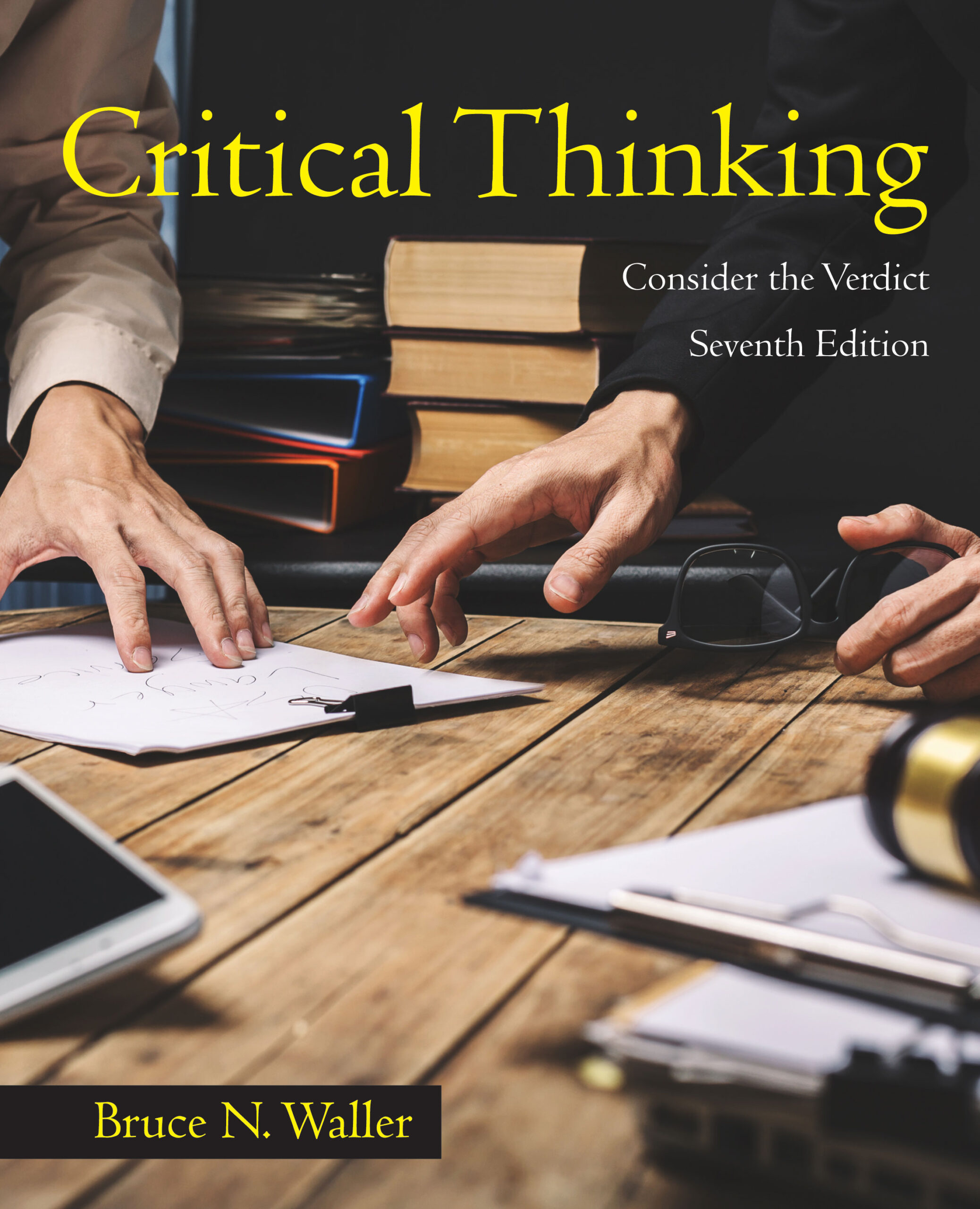
Description
There is a persistent need in our world for the ability to effectively navigate arguments and reach logical conclusions. The seventh edition of Critical Thinking: Consider the Verdict continues to provide a blueprint for developing skills for sound reasoning, judicious decision-making, and cogent conclusions. The text takes readers through such topics as relevant and irrelevant reasoning, the burden of proof, various forms of arguments and fallacies, statistics, evaluating premises, and more.
Waller’s knowledge and unique voice add to the value of the text. Each chapter is brimming with further opportunities to dive deeper and evaluate evidence through engaging exercises drawn from trial settings, jury deliberations, social and political topics, and advertising. Boxed sections, such as “Consider the Verdict,” highlight additional areas for readers to deeply analyze realistic scenarios that emphasize each chapter’s topic.
Reactions
“This book is awesome. It is well written and will keep students engaged. It provides real-world examples making it easier for students to connect content to application.” –Martina Malvasi, Austin Peay State University
Table of Contents
1. Introduction
2. A Few Important Terms
3. What’s the Question?
4. Relevant and Irrelevant Reasons
5. The Burden of Proof
6. Ad Hominem Arguments
7. Appeal to Authority
8. Analyzing Arguments
9. The Strawman Fallacy
10. Some Distinctive Arguments and Potential Pitfalls: Slippery Slope, Dilemma, and Golden Mean Arguments
11. Language and Its Pitfalls
12. Begging the Question
13. Scientific and Causal Reasoning
14. Arguments by Analogy
15. Necessary and Sufficient Conditions
16. The Truth, the Whole Truth, and Nothing but the Truth
17. Thinking Critically about Statistics
18. Critical Thinking Will Not Make You Infallible
2. A Few Important Terms
3. What’s the Question?
4. Relevant and Irrelevant Reasons
5. The Burden of Proof
6. Ad Hominem Arguments
7. Appeal to Authority
8. Analyzing Arguments
9. The Strawman Fallacy
10. Some Distinctive Arguments and Potential Pitfalls: Slippery Slope, Dilemma, and Golden Mean Arguments
11. Language and Its Pitfalls
12. Begging the Question
13. Scientific and Causal Reasoning
14. Arguments by Analogy
15. Necessary and Sufficient Conditions
16. The Truth, the Whole Truth, and Nothing but the Truth
17. Thinking Critically about Statistics
18. Critical Thinking Will Not Make You Infallible

Reviews
There are no reviews yet.